
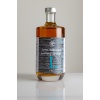
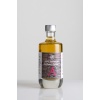

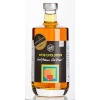

Apple Brandy in Oak Barrels: Toasted or Charred? The L-A-N-T Oaks – WOB Story Act 22
Four French oak origins, two methods of barrel treatment, and an extraordinary story of apple brandy maturation. In Act 22 of the WOB Story, Wolfram Ortner explains how WOB's oak-aged apple brandies have evolved, why exclusively charred barrels have been used since 2010, and how to remember four famous French oak origins with the acronym L-A-N-T.
1. From the Lavant Valley to 1,000 Metres Above Sea Level
The story of WOB's oak-aged apple brandies begins in Carinthia, Austria.
The apples originate from the Lavant Valley, a region with a long tradition of fruit growing. The fruit is processed, and the resulting distillates are matured in Bad Kleinkirchheim, approximately 1,000 metres above sea level.
This combination of regional ingredients and a distinctive approach to distillation and maturation forms the foundation of WOB's apple brandies.
From orchard to oak barrel, the guiding principles are regional origin, quality, and individual character.
2. Toasted or Charred – What's the Difference?
The treatment of the barrel's interior has a significant influence on the development of a spirit during maturation.
Toasted Oak Barrels
Toasting involves heating the inside of an oak barrel in a controlled manner without creating a pronounced charcoal layer.
Heat transforms compounds within the wood and can generate aromas reminiscent of vanilla, caramel, spices, and toasted notes.
The resulting flavour depends on the oak species, the intensity of toasting, the barrel's construction, and the maturation period.
Charred Oak Barrels
Charring exposes the barrel's interior to more intense heat, creating a visible layer of charcoal.
This technique is particularly associated with bourbon production, where new charred oak containers are required.
The charcoal layer and the heat-altered wood beneath it influence the interaction between the spirit and the barrel.
As a result, charred oak can produce a different aromatic profile from wood that has only been toasted.
The essential difference: Toasting thermally transforms the wood, while charring additionally creates a charcoal layer.
3. The Evolution of WOB Barrel Maturation
WOB initially matured its oak-aged apple brandies in toasted oak barrels.
Three or four vintages from the year 2000 were still matured in heavily toasted but uncharred oak.
Over time, WOB's approach to barrel maturation evolved.
Since 2010, WOB has used exclusively charred oak barrels for its oak-aged apple brandies.
The inspiration came from bourbon production and its tradition of heavily charred American white oak.
However, the objective was never to imitate bourbon. Instead, WOB adapted the principles of barrel treatment to a completely different raw material: apples.
Apple distillate has its own distinctive fruit character. Oak maturation introduces additional aromatic dimensions, creating new opportunities for complexity and balance.
4. LANT – Four French Oak Origins
How can you remember four well-known French oak origins?
Wolfram Ortner uses a simple memory aid:
LANT – pronounced like the German word “Land”, but with a hard T.
-
L – Limousin
-
A – Allier
-
N – Nevers
-
T – Tronçais
These names refer to French oak origins or traditional timber-producing areas associated with barrel making.
Oak origin can influence the characteristics of the wood. However, the actual oak species, growing conditions, grain structure, seasoning, cooperage methods, and heat treatment are equally important.
Consequently, the four origins should not be regarded as four fixed or universally predictable flavour profiles.
For WOB, they represent an intriguing foundation for exploring the relationship between apple distillate and oak.
5. A Symphony in Four Acts
Four oak origins, different wood characteristics, and the natural fruitiness of apples create fascinating possibilities for sensory diversity.
Wolfram Ortner describes the WOB oak-aged apple brandies as “A Symphony in Four Acts.”
The musical comparison is fitting.
Just as individual instruments contribute their distinctive sound to an orchestra, different barrels can contribute individual aromatic characteristics to a matured spirit.
The goal is not to overpower the apple.
Instead, the fruit and oak should complement one another and develop into a harmonious composition.
Numerous Gold and Double-Gold awards at the World-Spirits Award demonstrate the recognition these products have received in professional tastings.
6. How Oak Maturation Influences Apple Brandy
High-quality apple distillate already possesses its own aromatic personality before entering the barrel.
During maturation, several processes influence its development.
Compounds from the oak enter the spirit, limited oxygen exchange can occur through the barrel, and aromatic substances gradually change.
Depending on the barrel and maturation conditions, notes reminiscent of vanilla, caramel, spices, roasted ingredients, and wood may develop alongside the original apple aromas.
However, longer maturation does not automatically guarantee better quality.
The crucial question is whether the apple character remains recognisable and whether the oak complements rather than dominates the spirit.
From a sensory perspective, intensity, harmony, and finish are particularly important.
These qualities correspond to the WOB evaluation philosophy of Density, Harmony, and Length (DHL).
A successful oak-aged apple brandy should offer aromatic depth, a balanced relationship between fruit and wood, and a pleasant, lasting finish.
7. Discover and Taste WOB Apple Brandies
How do the different oak origins influence the final product? What happens when toasted oak is replaced by charred oak? And how does the apple character evolve during long maturation?
The best way to explore these questions is through tasting.
At the WOB Distillery in Bad Kleinkirchheim, visitors can discover and compare the different oak-aged apple brandies.
Product descriptions and prices are also available in the WOB online shop.
Explore the WOB Story:
Top Seller
Sesorisches Wissen Kompakt - IWS.TV Fibel

The Distillery Blew Up Around Us: Superheating During the Final Distillation – WOB Story Act 20